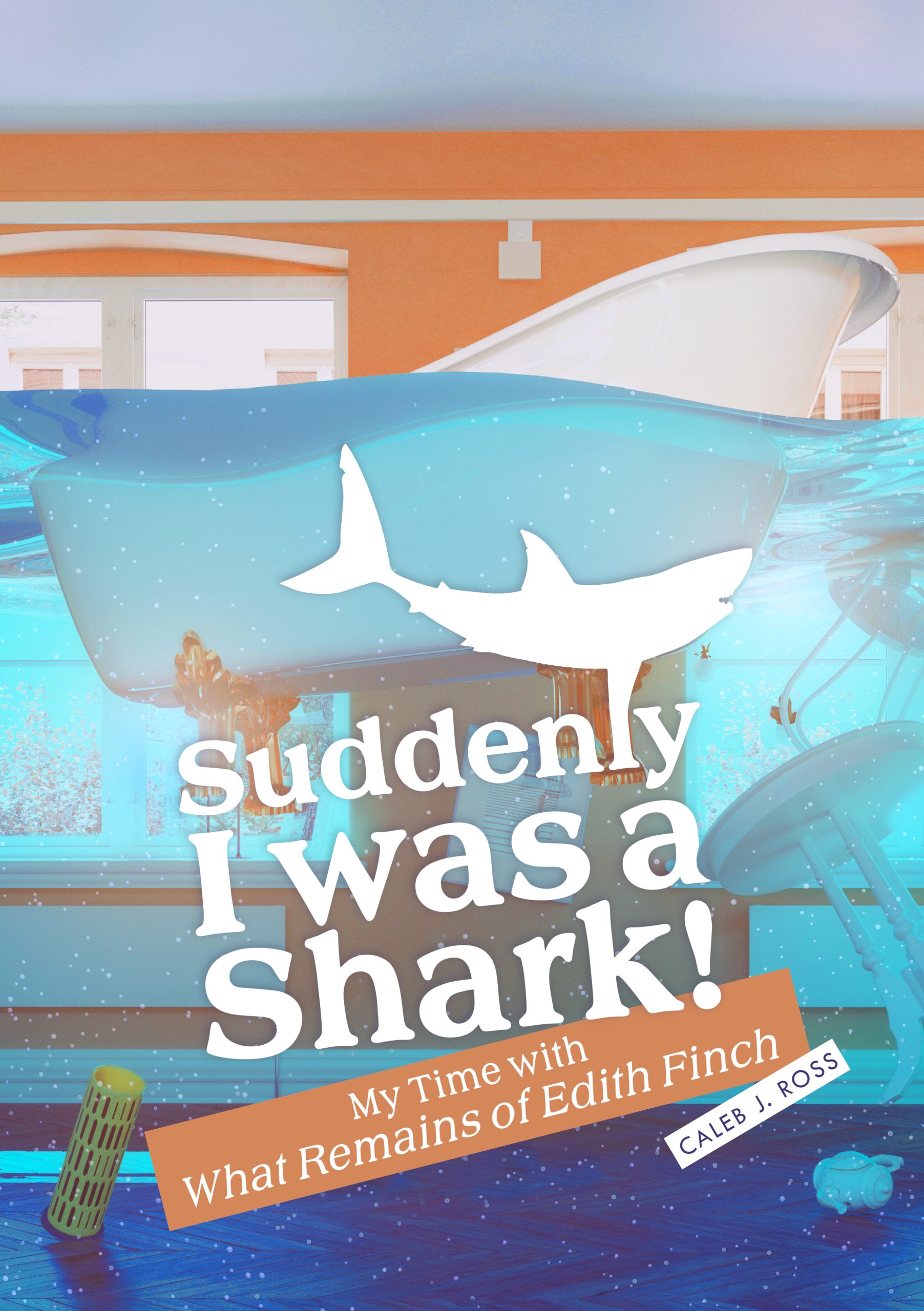
Suddenly I was a Shark! My Time with What Remains of Edith Finch
Caleb J. Ross explores the life-changing impact of this unassuming video game about a young woman’s attempt to understand a curse that has killed every member of her family.

The book about the video game, What Remains of Edith Finch
“I’ve spoken to countless people about this game, its heart, and its legacy, but no one as thoughtful and invested as Caleb. This book is a love letter. An essay. A manual. At times clinical and technical, and others witty and full of emotion. But throughout it all, we are led by his passion, and what a beautiful journey it is! Caleb’s love for gaming and storytelling is palpable. He brings his own history to that of the Finches, intertwining them. I’m so touched that Edith Finch has inspired stories and art like this. Thank you, Caleb..”
— Valerie Rose Lohman, What Remains of Edith Finch (voice of Edith Finch)
A love letter to a life-changing video game
What Remains of Edith Finch was released in 2017 amid a gaming public that had largely dismissed the walking simulator as a gaming genre. But for those who appreciated the power of a combat-less, story-driven video game, What Remains of Edith Finch would become a beacon for what’s possible when a game rejects traditional video game markers of progress in favor of narrative progression as its core player motivation. Jimmy Fallon, Saturday Night Live alumnus and host of The Tonight Show with Jimmy Fallon, says of the game, “it’s one of my favorite things… it’s gonna change your life.”
In Suddenly I was a Shark!: My Time with What Remains of Edith Finch, author Caleb J. Ross explores the life-changing impact of this unassuming video game about a young woman’s attempt to understand a curse that has killed every member of her family. By mixing developer interviews, personal stories, and examinations of the game’s many literary inspirations, Caleb delivers a powerful story of personal change via one of the most important walking simulator video games ever made.
Reviews from happy readers
“Caleb skillfully combines a deep analysis of the game’s story with personal (and powerful) anecdotes that beautifully illustrate the profound impact of WROEF’s interactive storytelling. Mix in some developer interviews (a favorite ingredient of mine), and you’ve got what has become one of my favorite books of the year. Beyond my newfound appreciation for Giant Sparrow’s masterful narrative, this book has unlocked a distinct perspective, previously missing, that I can apply to an entire genre – or even the medium itself. I wholeheartedly recommend this to anyone who’s played the game, or is looking for a reason to.”
– Dean Guadagno, Amazon reviewer and founder of The Video Game Library
“The creative structure of the book mimics the high creativity of the game and beckoned me to jump-the-fence to re-explore the game and re-think narrative games in general.”
– Brian, Amazon reviewer
“I really appreciate how thoughtful Caleb is with his connections. From discussing his own childhood trauma to recalling a moment in an art class, he reminds us of the importance of art, especially in video games, where we can virtually walk in someone else’s shoes.”
– Psyche24, Amazon reviewer
“This is a must read for any fans of video games. A love letter to his favorite game, author Caleb J. Ross provides insightful anecdotes and personal reflections for one of the most interesting games I’ve ever played. His prose is fantastic and his passion for video games shines on every page. I love this game and I love this book, and I know you will too!”
– Mr. M, Amazon reviewer
“This book is a great, in-depth look at one of the most interesting games to come out recently. It combines a close reading of the game story with personal anecdotes, relevant history and culture of the time, and interviews with the game creators. If you like the game, it’s a must read.”
– Pam D, Amazon reviewer
Do you want to have Caleb as a guest on your podcast? Do you want to interview Caleb? Do you want to request a review copy of Suddenly I was a Shark! My Time with What Remains of Edith Finch?
Contact information for Caleb J. Ross can be found on the Contact page.
Format details for Suddenly I was a Shark! My Time with What Remains of Edith Finch
| Title | Suddenly I was a Shark! My Time with What Remains of Edith Finch |
| Author | Caleb J. Ross |
| Genre | Non-fiction / Video and computer games / Humor and entertainment / Memoir |
| Price | $12.95 USD / £10.59 / €12.59 (Paperback) $9.99 USD (Kindle) |
| of Pages | 272 |
| ISBN | 9798388556080 |
| Publication Date | June 12, 2023 |