Study (the world/the craft)

Results of 5,000 words for Father’s Day

Posted on by Caleb J. Ross in General News, Study (the world/the craft) | 4 Comments

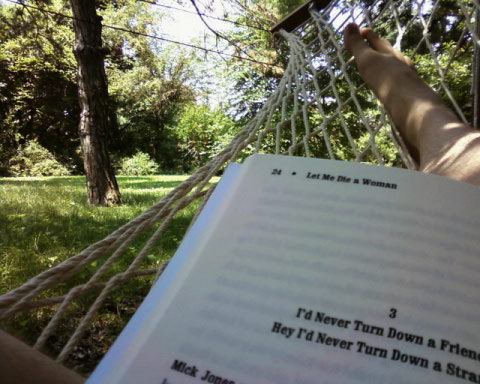
As far as meeting this goal, I failed. I did not reach 5,000 print-quality words in one day. However, I did learn something very important. I am simply not meant to write all day. I am glad that I can no longer blame my non-productivity on time constraints. In fact, I actually work better given 2-3 hour windows. As you can see by the time-line below, the day started off quite well.

10:08a (1 word) first word (The), first cup of coffee (Soy Chai Latte with an extra shot – It’s like beer: start the night with something exotic so that when you are drunk later you don’t care what brand you are drinking).
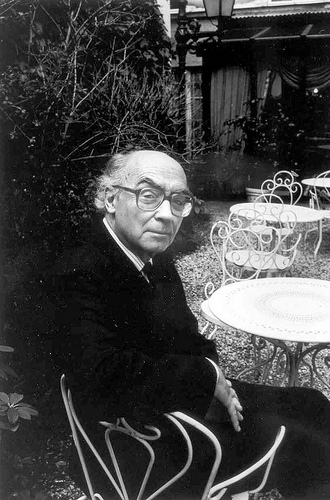
11:08a (570 words) went to the bathroom, took in a chapter of Saramago’s The Stone Raft, and gave the dog a treat. She’s been really good about not killing me, considering I am not a daily occupier of this house.
11:22a The headphones already hurt. Time to try listening to Bohren und der Club of Gore through speakers. Less ear pain, but too much outside noise mucking up what is supposed to be a way of isolation by sound.
12:05p (958 words) 2nd cup of coffee, this time black. 1,000 words in 2 hours. Things are not looking good. At this rate, 5,000 words will take me 10 hours, which I simply don’t have. Boooooo to goals.
1:16p (1,496 words) I said I wouldn’t, but I’ve got to get out of the house. I may slowly be realizing that I am just not meant to “go under” when I write. Could I be a normal 2-3 hour max/session writer?
2:44p (1,496 words) Notice the word count has not moved in 1 ½ hours. I drove to get a sandwich, then decided to drive home to finish the day. My wife has taken our kid to a friend’s farm for naturey stuff. So, I should have a couple more hours to at least round the count to 2,000 words.
6:04p (1,731 words) I’ll call these last 3 ½ hours a break, even though the duration really constitutes forfeiture. During this time I ate a couple donuts, drank some coffee, bought two Jose Saramago books (and learned that he has two posthumous English language translations forthcoming this year, Little Memories, an autobiography which I assume will be prepared for publication even considering his recent death, and Elephant’s Journey), and also a few Moleskine notebooks (which I learned is pronounced mol-a-skeen’-a, and not mol-skin as I had been doing for years). But I did come back to writing, and I did manage to pound out a few more words.
7:19p (2,041 words) I’m getting a shower.

What to make of this? As much as I would like live the romanticized writer’s life, I simply do not have the constitution to do so. My apologies to anyone who gambled incorrectly on this outcome. My advice is that next time you wager money on someone’s likelihood to meet a goal, don’t use me if your choose the affirmative side.


Subscribe to my amazing, hilarious YouTube channel. Just click the button below.

YouTubeSubscribe

Consider sharing this post on Facebook, Twitter, and Google+. Think of it as a way to tell a friend “I’m thinking of you.”

Best-selling doesn’t mean best writing

Posted on by Caleb J. Ross in Study (the world/the craft) | 2 Comments

(this is more of a rant than a cohesive post. Also not a cohesive post: an ionic neutral road sign…oh, I went there, sirs and mams)
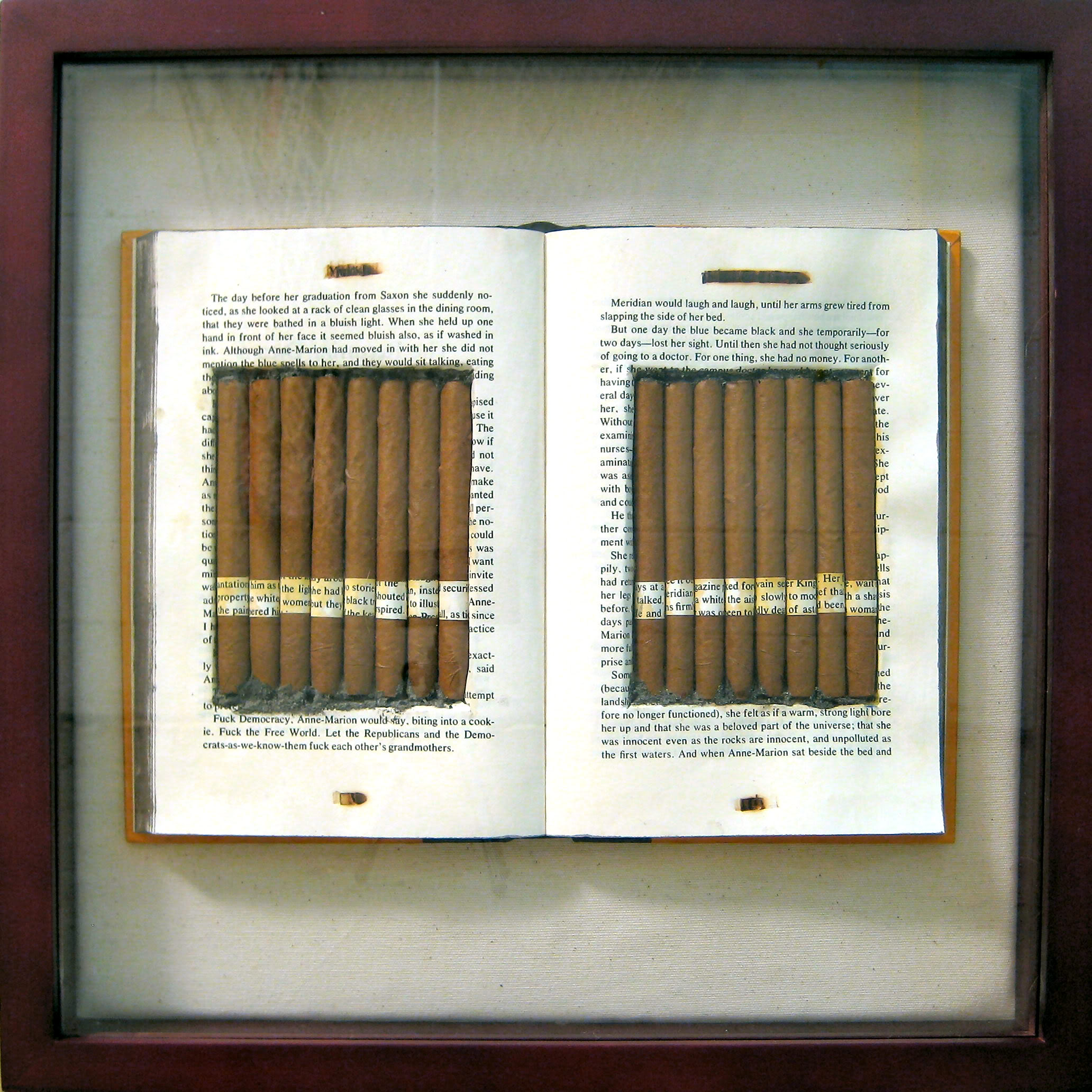
When I say that best-selling doesn’t mean best writing I understand the hipster ditch I dig. It sounds whiny and pretentious, all the more so when one realizes that nothing of mine is even close to best-selling. I’m not sure the word “best” could be put in front of any word and used to describe my work. Best tinder, maybe. Best use of paper bound by a cover bearing the name Caleb J Ross, perhaps. But someone could write my name on a phone book and it would be more “best” than my work. This ditch, though, it’s easy to dig, yet difficult to fill. But I will try.

When I say that best-selling doesn’t mean best writing, I’m really attacking the concept that commercial success defines artistic success. The Hitler example here would be Dan Brown’s DaVinci Code (“Hitler example” is a term I use to connote the extreme example; when someone wants to conceptualize something bad, Hitler is the go-to reference. Instead of explaining all of this, I should have just used a different term, maybe).

Many writers commonly denounce Dan Brown. While this may come off as petty jealously (we all want his money and readership), envy shouldn’t diminish the fact that his books are not well-written. Yes, they are great stories (those that I’ve read, I can vouch for), but they are not great writing. This is the divide between commercial and artistic success. Craig Clevenger, in an article for the Santa Barbara Independent (reproduced here at The Velvet) has much to say on Brown’s quality, even making the point that his prose is nearly indistinguishable from that of erotica, a genre accepted even by many of its authors as one meant for quantity over quality.

My point being, I suppose (see, even I don’t know if this thing has a point. I warned you), that it’s okay to voice your hate for a commercially successful book on terms of art. I think the key is to be able to back that opinion with a wide frame of reference. I would guess that the people who regularly and primarily read blockbuster novels (those by James Patterson, Stephenie Meyer, and Dan Brown for example) don’t often read other types, or many other, books. Therefore, they do not have a large enough frame of reference for measuring the quality of a book. So, those that may cite jealously as the source of any Brown-bashing, may be doing so without ever having experienced a truly well-written book.

Transformers might make tons at the box office, but film geeks know that The Machinist is a much better movie of humans vs. machine.

KC Masterpiece barbeque sauce sells truckloads around the county, but fat guys know that Cowtown is way better.

Or, shit, maybe people don’t care about writing and instead just want a story. That’s cool. As long as people are reading, I guess. Read more


Subscribe to my amazing, hilarious YouTube channel. Just click the button below.

YouTubeSubscribe

Consider sharing this post on Facebook, Twitter, and Google+. Think of it as a way to tell a friend “I’m thinking of you.”

Cigars and Writing

Posted on by Caleb J. Ross in Study (the world/the craft) | 4 Comments

I’ve been asked a few times lately about my infatuation with cigars, specifically regarding my pairing them with reading and writing. Though I will likely be forced to continue defending my obsession, I feel laying it out in a blog post may curb the questions. Or it may rouse a group of like-minded gourmets, in which case, Welcome, Friends!



I have never been a cigarette smoker. In fact, growing up, I routinely took a dramatic exit when my mother lit up in the living room (she doesn’t smoke anymore, hasn’t for years). I fanned barely noticeable smoke from my face when entering bars. I vehemently stomped on butts left to smolder on sidewalks and curbs. In short, I was a snobby little punk.

The impetus of my cigar habit is a mystery; the staying power, however, is quite explainable. I love the smell. I love watching the large plumes of smoke. I love that a cigar, due mostly to its size and smoke duration, forces one to relax. You can’t clean the kitchen when holding a lit cigar. You can’t run a marathon with smoke in your face (being a fat lazy guy surely has nothing to do with my marathon avoidance).

My wife calls me a hippy when I talk about watching the smoke. I admit, there isn’t any tangible, measurable benefit to watching smoke, which could place it into the get-a-goddamn-haircut-you-freak category of leisure. But watching smoke, like the very act of smoking, forces relaxation. This numbed mindset pairs well with reading and writing, both of which require a freedom of distraction.

So, hippy though I may be, a beautiful cigar—the look, the smell, the taste—is a Pavlovian trigger to push me into reading and writing in ways that other writerly clichés (coffee, alcohol, vampires) simply cannot.

Here are a few of my current favs. These, with the exception of the Leon Jimenes Cafe Dom. Corona are way to expensive for ritual savoring, so I reserve them for perfect weather only.

Drew Estate Natural Ltd. Irish Hops Drew Estate ACID Kuba Kuba
Drew Estate ACID 5 Leon Jimenes Cafe Dom. Corona

What are your writerly/readerly vices? The more cliché, the better.


Subscribe to my amazing, hilarious YouTube channel. Just click the button below.

YouTubeSubscribe

Consider sharing this post on Facebook, Twitter, and Google+. Think of it as a way to tell a friend “I’m thinking of you.”

The Velvet Podcast, Episode 004: “Why can’t I write,” I write OR Inventing Trans Fat

Posted on by Caleb J. Ross in Media, Other Writers, Study (the world/the craft) | Leave a comment
Episode #004 of The Velvet Podcastjust went live a few hours ago. Me, Rob Parker, and Mark Jaskowski talk about:

Most writers, whether hobbyists or professionals, would defend that writing is a compulsion. Yet despite this apparent need, writers find a lot a lot of ways to procrastinate (creating this podcast being one). In this episode, three Velvet members discuss why writing is so necessary, what keeps us from writing when we know we should, what keeps us writing once we start, and how helpful are writing exercises (Writers Digest would say “very;” their bottom line depends on it).(WARNING: We like tangents. Be weary)

Please, give it a listen. Subscribe via Feedburner, Podcast AlleyiTunes.


Subscribe to my amazing, hilarious YouTube channel. Just click the button below.

YouTubeSubscribe

Consider sharing this post on Facebook, Twitter, and Google+. Think of it as a way to tell a friend “I’m thinking of you.”

The Master’s Program as a Trade School

Posted on by Caleb J. Ross in Marketing, Study (the world/the craft) | 8 Comments

I’ve been accused of being a bit of a literary snob. Mostly by best-seller groupies who smell like trade paperbacks and poverty. Why don’t you go save a few dimes at a used blog store, and leave the shiny new posts to those of us with taste!

/UNDESERVED SENSE OF ENTITLEMENT

My justification for being a literary snob (literob?) always has been that if a book is best-selling and intellectually easily accessible, then it likely isn’t confronting dangerous (i.e., important) topics. I want to believe that fiction should be more than entertainment. For the most part, I still agree with this logic. But a few months ago, at the AWP Conference in Denver, CO, I came to a bit of a realization, with some help from author Tod Goldberg.

I realized that despite any drive to challenge the established format or structure of fiction, it is the story itself that keeps readers reading. I wanted to believe that a unique concept, or beautiful language, or inventive formatting alone could carry a book-length work. But no, it cannot. A book told from the perspective of a cancerous cell? Conceptually unique, but no. A book intimately describing that cancerous cell? Beautiful language, but no. A book giving dialog to every cancerous cell in a body, matching the text color to the cell color? Inventive formatting, but no. A book that imbues a cancerous cell with character traits similar to a human while putting that cell in a morally conflicted position? Sure.

My fault rested not entirely with the assumed intellectual ease of commercial (vs. literary) writing, but also with the ill-conception that plot-driven genre fiction is somehow weaker and easier to write than a high-Art piece of literary fiction. This opinion was birthed in college, where I first began to read and write. Had I read as a child, I may have understood the basal importance of plot long ago. But my literobbery was rooted in college, too late to let aesthetics matter. I was a head case (vs body case) from the beginning.

Now, five years post-graduation, a degree in-hand, and without a writing career that nullifies a day job, I’ve started to wonder about the role a university education plays in a writer’s life. Note: I wouldn’t trade my university experience for anything; I love being a literob. But I do wish that a stronger focus would have been placed on the writer’s career, and less on the writer’s life.

[pullshow]This is where Tod Goldberg comes in. During a panel titled Crime, Horror, Sci‐Fi, and Fantasy… Seriously, Goldberg, almost in passing, mentioned that [pullthis]he teaches his writing classes as though they were part of a trade program, meaning that he trains his students for actual jobs.[/pullthis] This goes against the traditional goal of a university writing program, which places almost no focus on job prospects, instead opting for a focus on intellectual ends (proselytizing [convincing students that their money is well-spent], pedagogy [teaching students to be teachers who in turn put their students in similar job-less positions], and how best to embed asides within parenthesis [I like to use brackets]).

If someone loves to weld, they go to a welding school to learn to be a professional welder. If someone loves to write, shouldn’t they go to a writing school to learn to be a professional writer? The key word being “professional,” meaning, to get paid doing so.  Read more


Subscribe to my amazing, hilarious YouTube channel. Just click the button below.

YouTubeSubscribe

Consider sharing this post on Facebook, Twitter, and Google+. Think of it as a way to tell a friend “I’m thinking of you.”