Here’s hoping some of that mainstream audience can pull their heads out of their asses long enough to read Ross, and then be gloriously horrified. – Paul Tremblay, author of The Cabin At the End of the World
Jackson Jacoby is a motherless twenty-two year old boy with only the support of his crazy ex-military Uncle Marve and a kindred motherless peer named Creg. Creg holds fast to the hope of one day reuniting with his mother while Jackson maintains that his own life is so much better off without all the baggage that comes along with being somebody’s son.
After finding a plea in a newspaper from a woman begging her runaway son, Kevin Masons, to return home, Jackson takes the opportunity to prove to Creg that a mother is not necessary to be happy. What begins as a drunken call to the mysterious mother leads to a cross-country pilgrimage to attend the will reading of Kevin’s recently deceased grandfather. Along the way, Jackson spreads tales of his participation in the human appendage trade, the history of his missing ear, and anything else that might validate his life the way he insists that a mother never could.
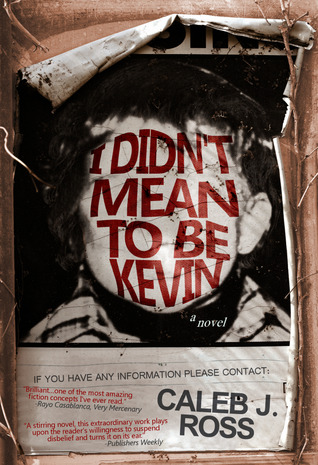
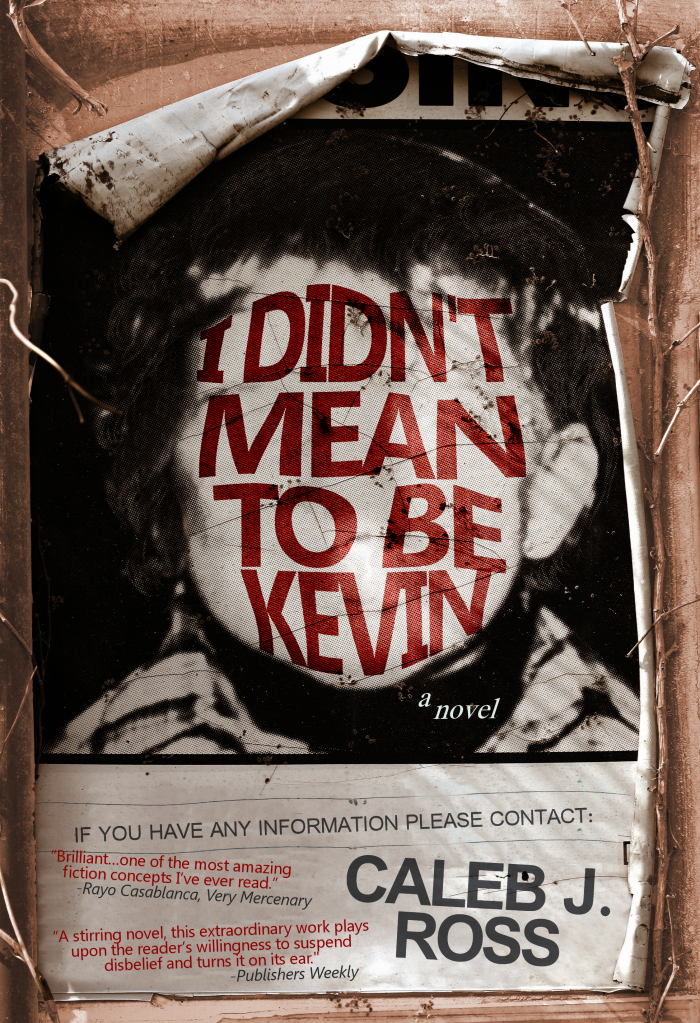
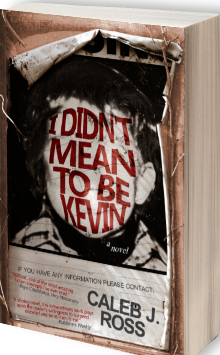
From I Didn’t Mean to be Kevin:
“My mother kicked me out when I was ten. I slept on couches, benches, in ditches and did everything short of kill house pets in order to eat. My uncle took me in during the worst of it, but because I was alone for most of my life I never had the opportunity to know if what I was doing truly mattered. Validation is a basic need in all of us. If you don’t get it as a kid, you try getting it as a teenager. If you don’t get it as a teenager, you try getting it as a twenty-two year old deformed, vagabond. My uncle says I have ‘nomadic roots’ but that implies roots of some kind. I’ve never had roots. I’ve never had a home life to point me where I needed to go. I’ve never had a destination, until recently.”
Purchase I Didn’t Mean to be Kevin
Amazon Barnes & Noble Substack
Praise for I Didn’t Mean to be Kevin
Paul Tremblay, author of The Cabin at the end of the World and A Head Full of Ghosts
A bit of an aside to start: here’s an indie publisher doing right by the reader. The purpose of an indie publisher should be to publish smart books that push buttons and boundaries that would otherwise be ignored by the 50-shades-of-grey and Tom-Clancy-wannabe mainstream.
Anyway, the book itself is wild ride through struggling middle-america complete with missing body parts and some dudes looking for their moms…You read this for the truly memorable cast of characters and Caleb’s smart, funny, and imaginative spin on a Palahniukian conceit.
Here’s hoping some of that mainstream audience can pull their heads out of their asses long enough to read Ross, and then be gloriously horrified.
Rayo Casablanca, author of 6 Sick Hipsters and Very Mercenary (Kensington)
“Brilliant…one of the most amazing fiction concepts I’ve ever read.”
Joey Goebel, author of Torture the Artist and Commonwealth (MacAdam/Cage)
“In I Didn’t Mean to Be Kevin, Caleb J. Ross writes fearlessly, never shying away from the wild, insane places where his fertile imagination leads him. The first half a twisted take on small-town aimlessness, the second half the American road novel from hell, the book is ultimately a darkly comedic evaluation of a generation of motherless men.”
Publishers Weekly
“A stirring novel, this extraordinary work plays upon the reader’s willingness to suspend disbelief and turns it on its ear. From the opening imagery set in the incinerator of a beef packing plant through a visit to a roadside museum of body parts through a seemingly interminable trek from a nondescript small town in the middle of the country to Delaware, the novel chronicles the encounters of a narrator who can’t keep his story straight with a cast of drifters many of whom are obsessed in finding their long-lost mothers. The narrator, Jackson Jacoby, tells anyone who will listen the story of how he lost his ear in a childhood torch accident. His storytelling, curiosity, and occasional empathy make him a compelling character. However, he is also prone to unpredictable turns of vandalism and cruelty. In a story he retells often (with slight differences in each new telling), he describes stealing an ear from a sleeping truck driver named Marion Garza and then attempting to sell it. In another example of Jackson’s deviant behavior, he impersonates a runaway in phone calls to the boy’s mother who is desperate for her son to come home. The mother, eager to believe she’s speaking to her son, plays along with Jackson’s ruse. The novel casts a similar spell on its readers.
Covering ground similar to the works of Sherman Alexie and Chuck Palahniuk, this is an author worth keeping an eye on.”
Courtney Alsop, Surreal Grotesque
This novel is easily comparable in subject matter to Chuck Palahniuk and Kurt Vonnegut with satisfying results…Ross has crafted a splendid story of identity and validation when one has no roots or beginnings.
Julie Morse, PLOP! Review
I Didn’t Mean to be Kevin is a study on the repercussions of abandonment. Ross argues the significance of family and whether or not having one determines a person’s worth… I Didn’t Mean To Be Kevin is literature that falls in line with the dirty, drug and sex-ridden films of Gus Van Sant and Harmony Korine who romanticize the grime and desolation of America’s working-class. “Validation is a basic need in all of us. If you don’t get it as a kid, you try getting it as a teenager. If you don’t get it as a teenager, you try getting it as a twenty-two year old deformed, vagabond.” Jackson says – a sentiment that steamrolls the book beginning to end.
Amy Sage Webb, Associate Professor and Co-Director, Creative Writing Program of ESU
“We know Marion Garza, hero and antihero. Whether we see him as cursed Hercules or noble Hector, he is certainly in Hell. Welcome to the grotesque, inverted world where the working day is the rest of the world’s sleep, where violence is the only means of avenging cruelty, and the price of vision is blindness. Literally it is Garza who begins the great alimentary canal of the beef processing plant that nourishes the ravenous appetite of a contemporary culture the rest of us inhabit on the other side of the drive-through window. Metaphorically, Garza is the executioner of our conscience. Steadfast, he slices through the last twitchings of our resistance. He machinistically conducts our ritual sacrifice nightly at the BWP packing plant, moving between the letting and the burning of blood. He is neither human nor animal, consumer nor consumed. Then, standing on the roof of the plant one night, surveying the steaming stench of a sulfurous city, Garza recognizes the narrative and takes into his hands to invert the binary of sacrifice and redemption. Ross’s prose stuns and singes in these opening chapters that set a killer on the loose and juxtaposes this to the motherless, cultureless Jackson and Creg in the Laundromat that maintains market dominance through dirty tricks. “Killed the bitch,” Jackson lingers over a line as he tells Creg the legend of Garza while Creg scans Telemundo for his mother. Jackson and Craig are proverbial sons of bitches here, whose identities the reader and the characters themselves will learn in the coming pages. Ross presents two Americas we know: the banal, grass-fed suburb, gutted of humanity, and the post-apocalyptic, post-colonial hell-scape of low-wage ethnic labor. Both are ripe for the sanitizing obliteration of the torch when Ross places it in Garza’s hands. In the path of his reckoning, the other characters will be reconciled to their roots or ripped free of “the trap” that is this place and the identities it offers. There is a delicious anticipation in knowing Garza’s rampage has begun, that he moves without witness, that he is among us now, that he is us.”
Reviews from happy readers
Listen to the full Booked Podcast in-depth discussion. Episode #60 – Caleb J. Ross Double Review
The thing that I think you should be aware of upfront: Jackson Jacoby, the main character, is hard to like. You learn early on that he is an unreliable narrator, and overall, not a very likable person. But like all compulsive liars, the truth slips out in bits and pieces throughout the story, and as we learn more about him, the more we come to understand the way he is. It’s one of the most commendable aspects of Ross’ fiction that he can make a compelling unlikable narrator. Whereas most fiction focuses on strong, decisive characters that follow a formula of revealing themselves through acts of will, Ross’ characters are lost, unsure of themselves, and a bit pathetic. But the interesting thing is, when you immerse yourself in the mind of such a person, you begin to see some of the little ugly pieces of yourself and the people you know….The real fun of I Didn’t Mean To Be Kevin is riding the course of this unreliable narrator and figuring out your version of the truth for yourself. Caleb Ross is never going to hand you a moral on a silver platter. So if you’re in the mood to read something different, something that will entrance you and bring you inside the world of a troubled mind, I heartily recommend I Didn’t Mean To Be Kevin.
Reader/Writer, Paul Eckert
Format details for I Didn’t Mean to be Kevin
| Title | I Didn’t Mean to be Kevin |
| Author | Caleb J. Ross |
| Genre | Literature – dark, humorous,road trip |
| Price | $12.99 USD |
| # of Pages | 276 |
| ISBN | (10) 061595409X, (13) 978-0615954097 |
| Publication Date | January 13, 2014 (3rd edition) |